With reference to Particulate Matter (PM) Consider the following statements:
1. PM is the mixture of solid particles and liquid droplets found in the air.
2. The PM 2.5 causes chronic illnesses such as lung cancer, chronic obstructive pulmonary disease (COPD) and cardiovascular diseases, that cause premature death.
3. A lot of the fine particulate matter comes from fuel combustion, both from mobile sources such as vehicles and from stationary sources such as power plants, industry, households or biomass burning.
Which of the statements given above is/are correct?
1 and 3 only
Incorrect Answer2 and 3 only
Incorrect Answer1, 2 and 3
Correct AnswerExplanation:
PM stands for particulate matter (also called particle pollution): the term for a mixture of solid particles and liquid droplets found in the air. Some particles, such as dust, dirt, soot, or smoke, are large or dark enough to be seen with the naked eye. Others are so small they can only be detected using an electron microscope.
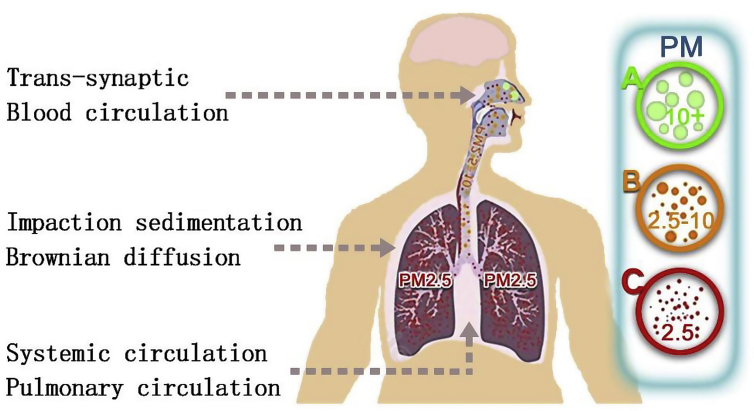
The impact of fine particulate matter (PM2.5) highlighted by the World Health Organisation (WHO) study is felt through a broad spectrum of acute and chronic illnesses that cause premature death. These include lung cancer, chronic obstructive pulmonary disease (COPD) and cardiovascular diseases.
Industries, households, cars and trucks emit complex mixtures of air pollutants, many of which are harmful to health. Of all of these pollutants, fine particulate matter has the greatest effect on human health. Most fine particulate matter comes from fuel combustion, both from mobile sources such as vehicles and from stationary sources such as power plants, industry, households or biomass burning.
![]() By: Kritika Kaushal
By: Kritika Kaushal